In early July, Google Maps started speaking to New Zealanders in a new voice. It reads navigation prompts in a Kiwi English accent and — this is the actual point — pronounces Māori place names correctly while doing it. The rollout landed on Android, iOS, Android Auto and CarPlay for anyone whose app language is set to English (New Zealand). As product launches go, it is a small one. What makes it worth your attention is not the feature. It is the receipt: Google began the project in 2022, signed a partnership with Te Taura Whiri i te reo Māori — the Māori Language Commission — in 2023, and spent roughly six months training the text-to-speech model. Four years, for a voice that says names properly.
Consider what was broken. The old voice handled English sentences fine. It fell over on the proper nouns embedded inside them — the suburb, the street, the turn you were actually listening for. Ngahiwi Apanui-Barr, chief executive of Te Taura Whiri, has described being thrown off on his own drive home when the Wellington suburb of Ngaio came out sounding like "N-gayo" — the Māori digraph "ng" flattened into an English one. Everything around the name was correct. Only the name was wrong. And in a navigation prompt, the name is the entire payload; the rest is packaging.
So how did the company with more compute than almost anyone on earth solve it? Not by scaling a model until the problem went away. It went and found a person. The new voice was trained on recordings of a New Zealand voice actor chosen for a specific and rare combination: a native Kiwi English accent, plus genuinely correct te reo Māori pronunciation. Google paired those recordings with publicly available data from the New Zealand Geographic Board, and leaned on the Language Commission for the standard. In other words, the fix was a native speaker who already knew how the names should sound, and an authority that could say definitively when the machine had it right.
There is a second half to the story that most coverage skated past, and it is the more interesting half. Google did not simply take the lexicon and walk away with it. Te Taura Whiri is the kaitiaki — the guardian — of the te reo Māori lexicon that came out of the work, and the stated long-term plan is to hand custody to a dedicated group of Māori language and IT specialists, so that Māori researchers and communities can access and benefit from the data. That is a provenance decision, not a quality decision. Someone asked not only whether the pronunciation was right, but who the language belongs to and who gets to decide that in future.
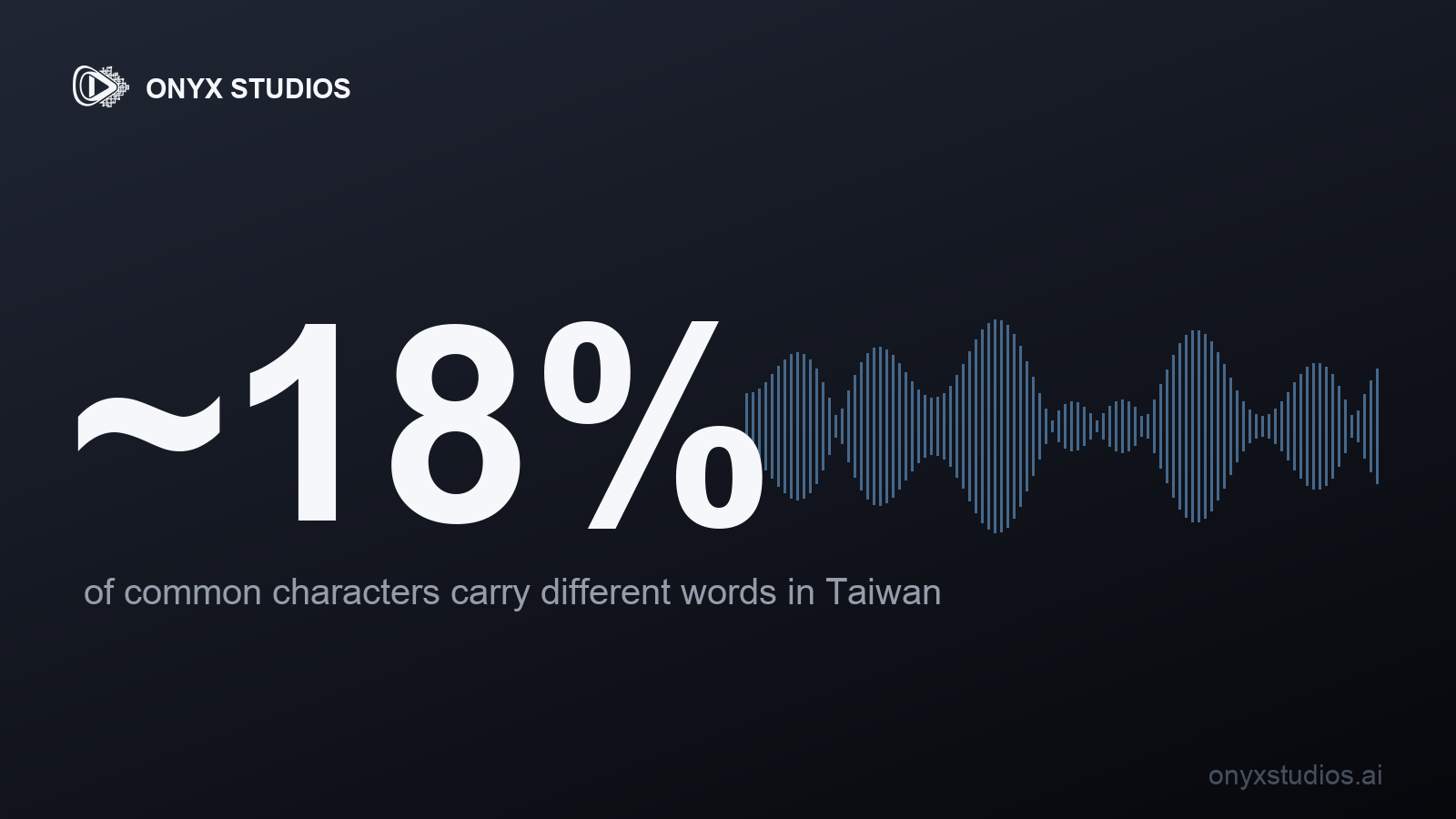
Now bring it back to whatever you are about to ship. Your project has proper nouns in it too. A brand name. A product line. A street address in a spot ad. A character name in a game. These are exactly the tokens a general-purpose model has the least reason to get right, because they are rare, they break the phonetic rules the model learned, and they often come from a language other than the one the sentence is in — which is precisely the Ngaio problem, wearing different clothes. Mandarin makes it worse rather than better: polyphones mean a single character can be read two ways, and the wrong reading in a name doesn't sound like an accent, it sounds like a different word.
And the model will not flag any of it. It reads the mangled name with exactly the same fluent confidence it reads the rest of the line, because it has no concept of having made a mistake. If nobody in your pipeline speaks the language, the error simply ships. Apanui-Barr's framing of why this matters is worth borrowing: place names carry stories, and "the first step to unlocking those stories is correct pronunciation." Swap in your own noun. A customer hearing their own suburb, their own language, or your brand name said wrong is not thinking about your model. They are thinking that you didn't check.
This is the shape of how Onyx Studios works, and we did not arrive at it because we were clever — we arrived at it because we ran a voice studio in Taiwan first, since 2008, with more than 1,500 professional actors. Every delivery is verified by a native speaker before it reaches the client, and proper nouns are the checkpoint we are strictest about: names, brands, numbers, and every polyphone read in context. If it passes, it ships; if it doesn't, we fix it before you ever hear it. Same for provenance — every AI voice in our library traces to a named professional who recorded under an explicit authorization that stays on file, and we can show you the document.
The lesson here is cheap to learn from someone else's four years. Google had every reason to believe a big enough model would eventually say Ngaio correctly, and it still hired a native speaker and asked an authority to hold the standard. Your campaign has a smaller budget and a shorter deadline, and exactly the same failure mode sitting inside it. So the question is not whether AI can read your script — it can, quickly and cheaply. The question is who checks the names before your customer hears them. Send us the script; that part is already covered.
Sources
- 1.Google — Google Maps has an authentic new voice in New Zealand: built with Te Taura Whiri (the Māori Language Commission) and New Zealand Geographic Board data; Android, iOS, Android Auto and CarPlay
- 2.1News — Google Maps learns to pronounce Māori place names: project began 2022, partnership signed 2023, ~6 months training on a Kiwi voice actor's recordings; Te Taura Whiri as guardians of the lexicon