Here is the uncomfortable part: the hard problem in voice cloning is no longer the cloning. Open-source projects can reproduce a recognizable voice from roughly five seconds of clean audio, and commercial tools now advertise usable clones from three to ten. The technology has effectively been solved and commoditized. What has not been solved — and what almost nobody slows down to get right — is everything that surrounds the clone: whose voice it is, whether you are allowed to use it, where you are allowed to use it, and who checks the result before it reaches an audience. The speed is intoxicating, and that is precisely the trap.
Start with the first thing, because everything else rests on it: consent and rights. A voice is not a free-floating texture you can lift off a podcast or a YouTube clip. It belongs to a person, and increasingly the law treats it that way. In March 2024, Tennessee enacted the ELVIS Act — the Ensuring Likeness Voice and Image Security Act — the first U.S. statute to explicitly fold an individual's voice into their protected right of publicity, making it unlawful to clone an artist's voice with AI without consent. If you cannot point to a clear, documented agreement from the person whose voice you are reproducing, you do not have a project; you have exposure.
The second thing is the law where you actually operate, because consent is necessary but not sufficient. The legal map is being redrawn underneath you in real time. At the U.S. federal level, the NO FAKES Act — Nurture Originals, Foster Art, and Keep Entertainment Safe — would create a nationwide property right in a person's voice and visual likeness and let individuals act against unauthorized digital replicas and the platforms that host them; it was first introduced in 2024 and reintroduced in the current Congress in 2025 with backing from SAG-AFTRA and the major labels and studios. In Europe, the EU AI Act's Article 50 will require anyone deploying AI that generates a deepfake — explicitly including audio — to disclose that the content was artificially generated, with those transparency obligations taking effect on 2 August 2026. A clone that is perfectly legal in one market can be a violation in the next.
The third thing is the one engineers underrate and clients never ask about: data quality. A clone is only ever as good as what it learns from. Garbage in is not merely garbage out — it is uncanny, mispronounced, accent-drifting garbage out, the kind that sounds almost right and therefore reads as deeply wrong to a native ear. Reference audio carries pitch, timbre, rhythm, room tone, and the small idiosyncrasies that make a voice that voice. Feed a model a noisy phone recording, a clip riddled with reverb, or material sampled down to a lower fidelity than it was captured at, and the system will faithfully learn the flaws and amplify them. The clones that hold up are built on clean, consistent, high-resolution source — captured under controlled conditions, not scraped.
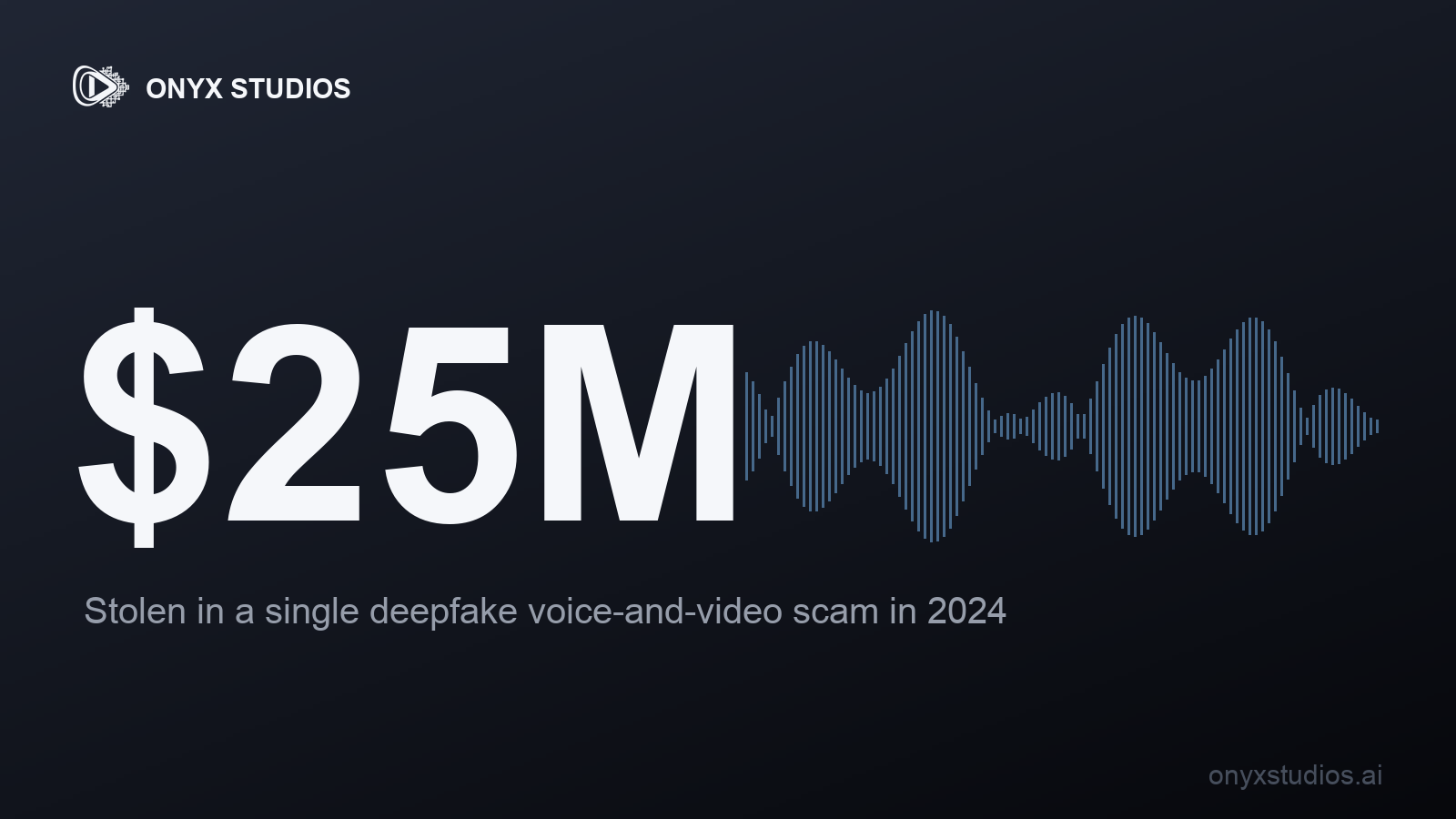
The fourth thing is the one that should keep everyone honest: misuse, fraud risk, and disclosure. The same realism that makes a synthetic voice useful for an audiobook makes it a weapon in the wrong hands. U.S. consumers reported losing $12.5 billion to fraud in 2024 — a 25 percent jump in a single year, per the FTC — with imposter scams accounting for $2.95 billion of it. The most vivid warning came out of Hong Kong, where a finance employee at the engineering firm Arup was duped into wiring $25 million across fifteen transactions after a video call in which every participant but him was an AI-generated deepfake of a colleague. None of this means voice synthesis is illegitimate. It means a serious operator builds disclosure and provenance into the workflow rather than bolting it on after a headline.
The fifth thing closes the loop the technology cannot close on its own: who verifies the output. A model does not know that it just produced a mainland-accented reading for a Taiwan campaign, that it picked the wrong reading of a polyphonic character, or that the emotional register is subtly off for the scene. It has no ear and no stake. A native speaker does. Generative voice has a genuinely impressive trick — it produces fluent speech in seconds — and the speed is real. So is the blind spot hiding inside it: the model is confident in exactly the moments it is wrong, and only a person who actually speaks the language can catch the syllable that gives the whole thing away.
This is exactly the discipline Onyx Studios was built around. Every voice we work with is sourced through explicit, signed authorization and buyout contracts kept on file — there is no scraping, no "close enough," no voice in our library that its owner did not knowingly agree to. Our reference recordings are captured clean and at full resolution, because we know the clone inherits whatever the source carries. And nothing ships without passing through a native speaker who actually speaks the variety in question — Taiwan Mandarin, Cantonese, or one of the 40-plus languages we deliver — which is why our promise is not "AI-fast" but AI-Generated, Human-Perfected.
Cloning a voice will only get easier; doing it in a way you can stand behind will not. If you are weighing a synthetic voice for your brand, your product, or your catalog, the question to ask a vendor is not how fast they can generate it — it is whether they can show you the consent, name the law they are operating under, prove where the data came from, and put a human name to the person who signed off on the final take. We can answer all four. Bring us the voice you want to use the right way, and let us build it on a foundation that holds up — to your audience, to your lawyers, and to the next regulation that lands. Talk to Onyx Studios.